 WhatsApp
Choosing the right manufacturer is one of the most consequential decisions you’ll make as a Muslim fashion reseller or small business owner. The wrong supplier means inconsistent quality, missed delivery dates, and unhappy customers. The right one becomes a growth partner. Here’s how to evaluate your options systematically. (For the buyer’s-side companion guide, see Buying Wholesale Hijab Direct from the Factory.)
What to Look For in a Muslim Apparel Manufacturer
1. Production Capacity That Matches Your Needs
Production capacity tells you how much a factory can realistically handle — and whether they’ll prioritize your orders or treat them as an afterthought.
Questions to ask:
- How many pieces do you produce per week/month?
- What’s your current utilization rate?
- During peak season (Ramadan/Eid), how does your lead time change?
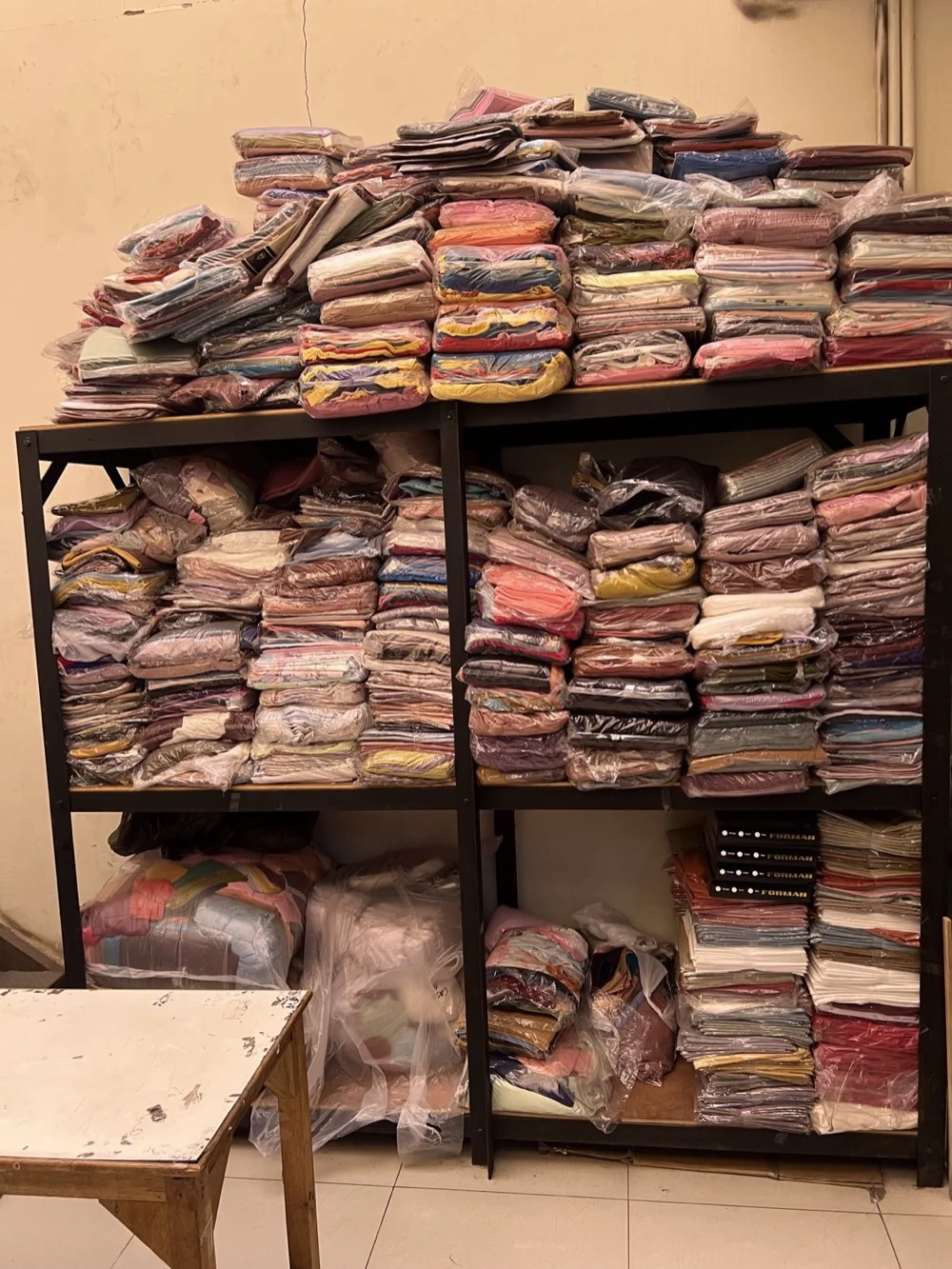
A factory producing 200,000+ pieces per month (like Tiga Raga Konveksi) has the capacity to absorb large orders and still deliver on time. A small home-industry operation might produce 4,000–20,000 pieces per month — fine for small orders but risky for growing businesses.
Why it matters for SMEs: Small businesses often grow faster than expected. If your supplier can’t scale with you, you’ll face the painful process of switching manufacturers mid-growth — at exactly the wrong time.
2. Product Range and Depth
A manufacturer with a broad, deep product range gives you flexibility to grow your business without needing multiple suppliers.
Assess:
- How many distinct product types do they produce? (hijab styles, gamis, ciput, manset, etc.)
- How many color variants per product?
- Do they produce in multiple size ranges?
- Do they offer custom colorways or are you limited to their stock palette?
The practical implication: with 100+ color options per product, you can differentiate your store’s selection from competitors who are buying the same 20–30 colors available from distributors.
3. Minimum Order Quantity (MOQ)
MOQ is the minimum quantity you must order per product or color. This directly impacts your cash flow and inventory risk.
| MOQ Level | What it Means |
|---|---|
| 1–2 dozen per color | Ideal for new resellers and small businesses |
| 3–5 dozen per color | Reasonable for established resellers |
| 10+ dozen per color | Better suited for large wholesalers or retail chains |
| No MOQ | Usually a distributor, not a manufacturer — prices are higher |
For SMEs just starting out, low MOQ per color is critical. It allows you to test multiple colors with manageable capital at risk.
4. Quality Consistency (Not Just Initial Quality)
New suppliers often put their best quality into samples and first orders to win the relationship. The real test is consistency across multiple orders.
How to evaluate this without a long track record:
- Ask for references from existing long-term resellers
- Check independent reviews on platforms like Google Business, Shopee, or Facebook
- Look at the factory’s own quality control process: do they inspect fabric before cutting? Are there output QC checks?
- Test-order a second and third batch — quality often dips after the honeymoon period
Red flag: A supplier who can’t explain their quality control process, or who deflects QC questions.
5. Communication and Responsiveness
A manufacturer who takes 3 days to respond to an order inquiry will take 3 days to respond when there’s a problem with your delivery. Responsiveness is a proxy for how much they value your business.
What to test during evaluation:
- How quickly do they respond to your first inquiry?
- Are answers specific and helpful, or vague and generic?
- Do they proactively share information (price updates, production delays) or do you have to chase?
The gold standard: responses within a few hours via WhatsApp, clear answers, proactive updates when your order is delayed.
6. Pricing Transparency
Legitimate manufacturers have a price list. If a supplier won’t share pricing upfront, or quotes “it depends” for everything without a framework, that’s a signal of either disorganization or a tendency to vary pricing opportunistically.
What transparent pricing looks like:
- Clear per-item prices by quantity tier
- Separate pricing for custom vs. stock items
- Explicit shipping costs (or a clear framework for calculating them)
- Payment terms stated upfront
7. Private Label Capability
If you’re building a brand rather than just reselling, private label is essential. Not all manufacturers offer it, and those that do vary significantly in what they can produce.
What to check:
- Woven label vs. printed label vs. hang tag?
- Custom packaging options?
- MOQ for private label (usually higher than plain stock)
- Lead time for first private label order (label production adds time)
Private label transforms your business from “reseller” to “brand owner” — a much stronger competitive position with better margins and customer loyalty. See our private label service for a concrete example of an end-to-end private label package.
Red Flags to Watch For
Price That Seems Too Good
Suspiciously low prices are usually explained by one of:
- Inferior fabric (lower gsm, prone to pilling or color fading)
- Inferior finishing (loose threads, uneven seams, color inconsistency)
- Inflated unit prices but low apparent per-piece pricing (bait and switch)
- Subcontracting to even cheaper operators (no quality control)
The Muslim fashion market has many quality tiers. Know which tier your customers expect, and verify that your supplier delivers at that tier.
No Physical Address or Verifiable Factory
Any legitimate factory should be willing to share their full address and welcome visits (with appointment). Online-only suppliers with no verifiable physical location are often reselling, not manufacturing.
Unwillingness to Provide References
An established manufacturer will have long-term reseller relationships they’re proud of. If they can’t or won’t connect you with existing customers, ask why.
Inconsistent Samples
If a supplier sends you samples that vary significantly from each other in color accuracy or finishing quality, that’s a preview of what your orders will look like.
The Evaluation Checklist
Use this when comparing manufacturers:
Capability:
- Production capacity sufficient for your projected volume
- Product range covers what you need now and likely in 12 months
- Color range deep enough to differentiate your offering
- MOQ feasible with your capital
Quality:
- Sample quality matches stated specification
- Quality control process documented and explained
- References available and positive
- Second sample order (different batch) consistent with first
Business terms:
- Price list available and transparent
- Payment terms clear
- Lead times stated and honored
- Returns/defect policy in writing
Communication:
- Response time acceptable for ongoing business
- Staff knowledgeable and helpful
- Proactive communication style
Scale:
- Private label available (if needed)
- Can scale capacity with your growth
- Stable business with multi-year track record
Working with Multiple Suppliers vs. One Primary Supplier
Single primary supplier: Simpler, builds a stronger relationship, often unlocks better terms over time. Risk: any disruption at the factory directly impacts your business.
Multiple suppliers: Resilience and redundancy. Allows A/B testing on quality and price. Risk: harder to build deep relationships, more management overhead.
Recommended approach for SMEs: Start with one primary supplier. Once your business reaches stable volume, identify a backup supplier in a different product category. This gives you resilience without spreading your orders too thin.
Why Tiga Raga Konveksi Is a Strong Partner for SMEs
Since 2004, Tiga Raga Konveksi has grown specifically to serve resellers and small businesses, not just large wholesale buyers:
- Accessible MOQ: 2 kodi (40 pcs) for ready-stock wholesale — the same 2 kodi (40 pcs) with your own brand label — feasible for businesses at every stage
- Wide range: Hijab (voal, cerutti, instant bergo, plisket, syar’i), ciput, manset, and gamis — everything in one factory (see the full catalog)
- Signature fabrics: Exclusive access to domestic and international fabric suppliers — our fabrics have a signature feel that’s hard for other factories or counterfeits to duplicate
- Color depth: 100+ colors per product line — differentiate your selection
- Sell-ready delivery: Multi-layer QC plus individual retail-ready packaging in-house — your order arrives ready to sell, no repackaging needed
- Private label: Full private label service for resellers ready to build their own brand
- 20+ years in operation: Stability you can build a business on
Contact us to discuss your requirements and receive our current price list. For specifics on MOQ, lead time, payment terms, and shipping, see our FAQ.
Already producing and considering a move or a backup supplier? Read how to switch manufacturers without losing quality and the second-source playbook.