 WhatsApp
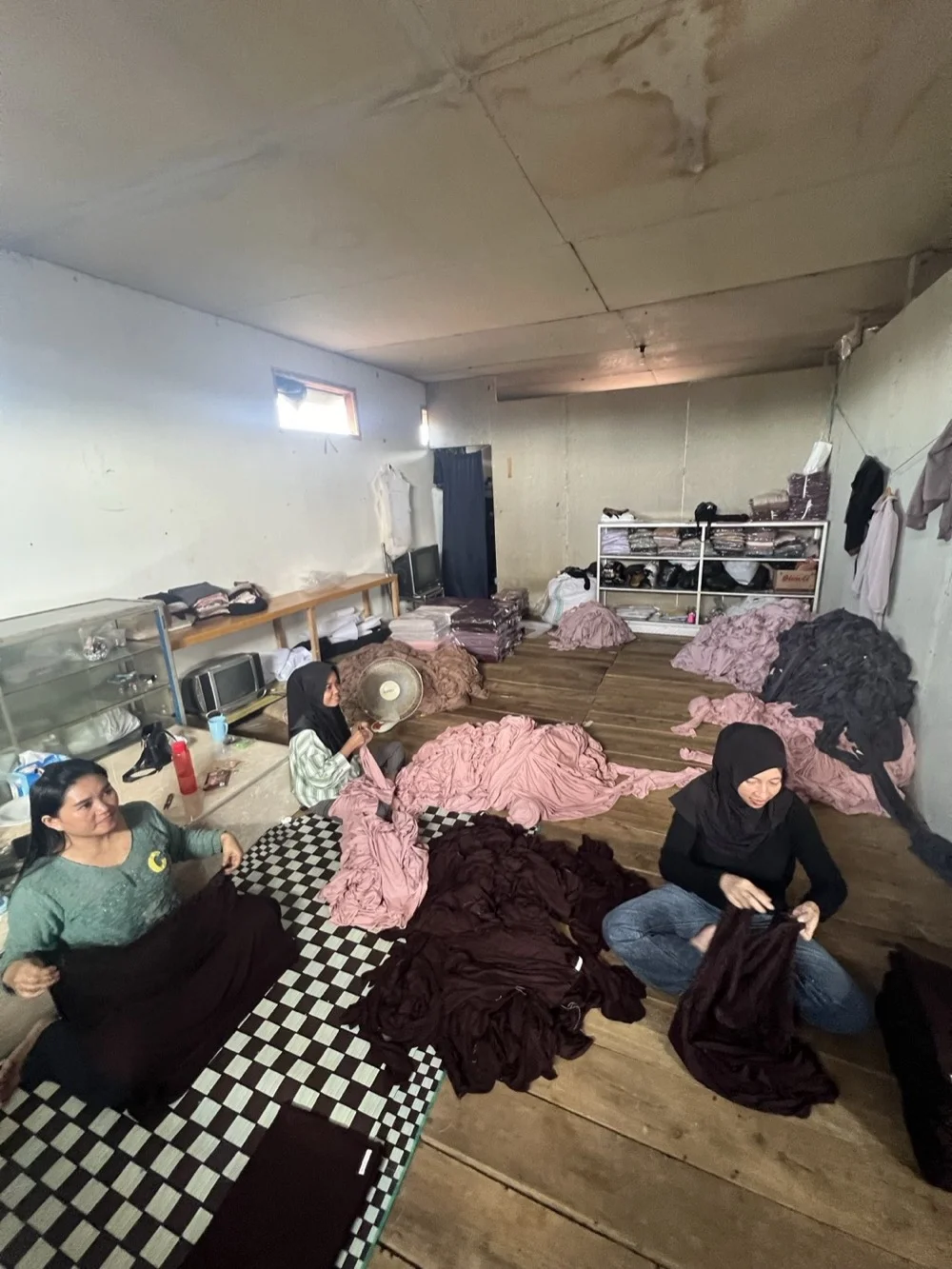
Sourcing hijab wholesale directly from a manufacturer — bypassing distributors and middlemen — is the most effective way to build a profitable reseller business. This guide covers everything you need to know about factory-direct procurement, from minimum order quantities to the product categories that sell best.
Why Buy Direct from the Manufacturer?
When you buy from a distributor or wholesaler, you’re already paying their margin on top of the factory price. Going direct eliminates that layer:
- Lower prices — 20–40% cheaper than distributor prices for the same product
- Access to the full color range — Distributors carry limited SKUs; factories produce hundreds of color variants
- Custom options — Custom colors, private label, and made-to-order are only available at the factory level
- Consistent quality — Direct accountability; no quality degradation from multiple handling points
- Build a real supplier relationship — Dedicated support, priority production slots, and first access to new products
How the Wholesale Hijab Business Works
Understanding the supply chain helps you negotiate better and avoid common pitfalls.
The Supply Chain
Raw fabric → Cutting → Sewing/Finishing → Quality Control → Factory warehouse
                                                                    ↓
                                                           Direct reseller (you)
                                                                    ↓
                                                           End consumers
By entering at the factory warehouse level, you capture the distributor and retailer margins for yourself.
Pricing Tiers
Most manufacturers use volume-based pricing:
- Tier 1 (low MOQ): 1–5 dozen per color/item — entry-level wholesale price
- Tier 2 (medium MOQ): 6–11 dozen — ~10–15% below Tier 1
- Tier 3 (high volume): 12+ dozen — factory’s best price, closest to production cost
The exact tiers vary by manufacturer. Always ask for a tiered price list when making first contact.
Product Categories in the Wholesale Hijab Market
1. Voal Hijab (Pashmina & Square)
What it is: Lightweight, breathable fabric woven from polyester microfiber. Available as rectangular pashmina (~70×175cm) and square segi empat (~110×110cm or larger).
Why it sells: The everyday workhorse of the hijab market. Suitable for all occasions, all ages, and every climate. The “safe” stocking item for new resellers.
What to look for in quality: Even weave density, clean cut edges, color fastness (no bleeding when wet), drape that falls naturally without bunching.
2. Cerutti Hijab
What it is: Woven fabric with a smoother, slightly lustrous surface compared to voal. Holds its shape better and drapes elegantly.
Why it sells: Premium daily-wear and semi-formal segment. Higher price point than voal, better margins.
3. Instant Hijab / Bergo
What it is: Pre-shaped hijab that slips on in seconds — no pinning, no folding. Includes jersey bergo (casual), premium jersey bergo, and syar’i bergo (longer, more coverage).
Why it sells: Massive convenience appeal. The fastest-growing segment for working women and mothers.
Key specs to check: Inner lining quality (itchy inner = bad reviews), stretch recovery (poor recovery = loses shape after washing), seam finishing.
4. Pleated (Plisket) Hijab
What it is: Accordion-pleated fabric that fans out elegantly when draped. Available in pashmina and square formats.
Why it sells: Premium fashion segment. Stands out in photos, popular for events and condangan (weddings). Higher retail price point.
Handle with care: Plisket loses its pleats if wrung or machine-washed aggressively. Educate your customers on care.
5. Syar’i / Khimar
What it is: Long, flowing hijab designed to provide full chest coverage. Usually cut in a cape-style with front panels.
Why it sells: Growing religious observance market. Less price-sensitive than fashion hijab — customers prioritize fit and coverage over cost.
6. Inner Ciput & Manset
What it is: Under-hijab caps (ciput) and arm sleeve covers (manset). Essential accessories that every hijabi needs multiple of.
Why it sells: Fast-moving, low price point, high repeat purchase rate. Perfect for bundling with hijab orders or as a standalone income stream.
For a deeper guide on evaluating manufacturers (capacity, QC, red flags, MOQ), see How to Choose the Best Muslim Apparel Manufacturer for Small Businesses.
Selecting Colors for Your First Order
Color selection is one of the highest-stakes decisions for a new reseller. The wrong color mix ties up capital in slow-moving inventory.
The 70-20-10 Color Rule
70% — Core neutrals (guaranteed sellers):
- White / off-white / cream
- Black
- Warm grey / charcoal
- Nude / beige
- Navy
20% — Trending colors (current season):
- Olive, mocha, terracotta, lilac (2026 palette)
- Earth tones: mocca, caramel, warm taupe
10% — Statement/bold colors (for fashion-forward customers):
- Emerald, cobalt, burnt orange, deep plum
Stick to this ratio for your first two or three orders. Only increase bold colors once you know your customer’s taste.
Reading the Market
Where to track what colors are trending:
- Instagram hashtags: #hijabootd, #hijabstyle, #busanamuslim
- TikTok: search hijab fashion creators you want to serve
- Shopee/Tokopedia bestseller lists — updated in real time
- Your own sales data after the first 2–3 orders
- Our 2026 hijab trends overview for the colour palette and styles to watch this season
MOQ (Minimum Order Quantity) — What to Expect
MOQ varies significantly by manufacturer. Here’s the typical landscape:
| Manufacturer type | MOQ | Notes |
|---|---|---|
| Large factory (like Tiga Raga Konveksi) | 2 kodi (40 pcs) | Accessible for new resellers |
| Mid-size factory | 5–10 kodi | Still reasonable |
| Small home industry | No MOQ | Higher per-unit price, lower quality |
| Distributor (not factory) | No MOQ | 30–50% above factory price |
(A kodi is the standard Indonesian wholesale unit: 20 pieces.)
At Tiga Raga Konveksi, MOQ starts at 2 kodi (40 pieces) for ready-stock wholesale — the same 2 kodi (40 pieces) if you want the goods labeled with your own brand. This makes it feasible for resellers just starting out to test the market without overcommitting capital. See our full product catalog for the range with starting prices per kodi, and check the FAQ for the full MOQ tiers. For pashmina specifically, read the wholesale pashmina guide and how to choose pashmina fabric.
The Ordering Process: Step by Step
Step 1: Research and shortlist suppliers
Criteria: production capacity, product range, price list availability, responsiveness, sample quality.
Red flags: unwilling to share a price list, no clear address, no factory photos, pressure tactics.
Step 2: Request a price list and product catalog
Any legitimate manufacturer should be able to send you a current price list within 1–2 business days. Ask for photos or fabric swatches if you’re deciding on quality tiers.
Step 3: Order samples (optional but recommended for first order)
For orders above a few hundred units, request samples of the specific items and colors before committing. Evaluate: color accuracy vs. catalog photos, stitching quality, fabric hand-feel.
Step 4: Place your order
Confirm: exact item codes, colors, quantities, sizes (if applicable), any custom requirements (labels, packaging), estimated production lead time, payment terms.
Step 5: Arrange payment
Most Indonesian factories accept bank transfer. For first-time buyers, full payment upfront is standard. As you build a relationship, 50% deposit + 50% on completion may be available.
Step 6: Production and delivery
Standard lead times for stock items: 3–7 business days. Custom/made-to-order: 2–4 weeks depending on quantity. Confirm a delivery date in writing.
Pricing Your Products for Resale
A sustainable reseller business requires healthy margins. Here’s a simple pricing framework:
Cost of goods (factory price)
- Shipping / freight cost
- Any import duties (for cross-border) = Your landed cost per unit
Minimum retail price = landed cost × 2.5 (40% gross margin after all costs)
Healthy retail price = landed cost × 3–4 (67–75% gross margin)
Hijab and modest fashion in Indonesia typically operates at 2.5–3× markup for the retail layer. If your competition is pricing at 2×, either they have a cost advantage you don’t, or they’re operating unsustainably.
Building a Long-Term Supplier Relationship
The best factory relationships give you access to new colors before they’re released publicly, priority production slots during peak season (Ramadan/Eid), and flexibility on order terms.
How to build this:
- Pay on time, every time. This is the single most important factor.
- Give feedback. Manufacturers value resellers who communicate what customers like and don’t like.
- Grow your orders. Consistent volume growth signals commitment.
- Be a fair problem-solver. If there’s a quality issue, raise it professionally with documentation. Aggressive complaints damage relationships; constructive ones improve them.
Getting Started with Tiga Raga Konveksi
Tiga Raga Konveksi has been manufacturing hijab and Muslim apparel in Bandung since 2004. We produce voal pashmina, cerutti, instant bergo, pleated hijab, syar’i khimar, ciput, and gamis — all from our own factory with no middlemen.
To start: Contact us via WhatsApp with your product and color requirements. We’ll send you our current price list and arrange samples if needed. For detailed answers on MOQ, lead time, payment, and shipping, see our FAQ.