 WhatsApp
There is a conversation that happens almost every time a brand from outside Indonesia starts talking to us seriously. They look at the catalogue, they like it, and then they ask: “I can sell all of this in my market, right?”
The honest answer is: some of it, and some of it needs adjusting. That is not a quality question — the fabric and the stitching are the same either way. It is a taste question.
We have been producing for brands in Indonesia and Malaysia for years. The difference is consistent enough that we can usually guess which market a brand is selling into just from the list of styles they ask for.
Indonesia: plain pieces, where the fabric does the talking
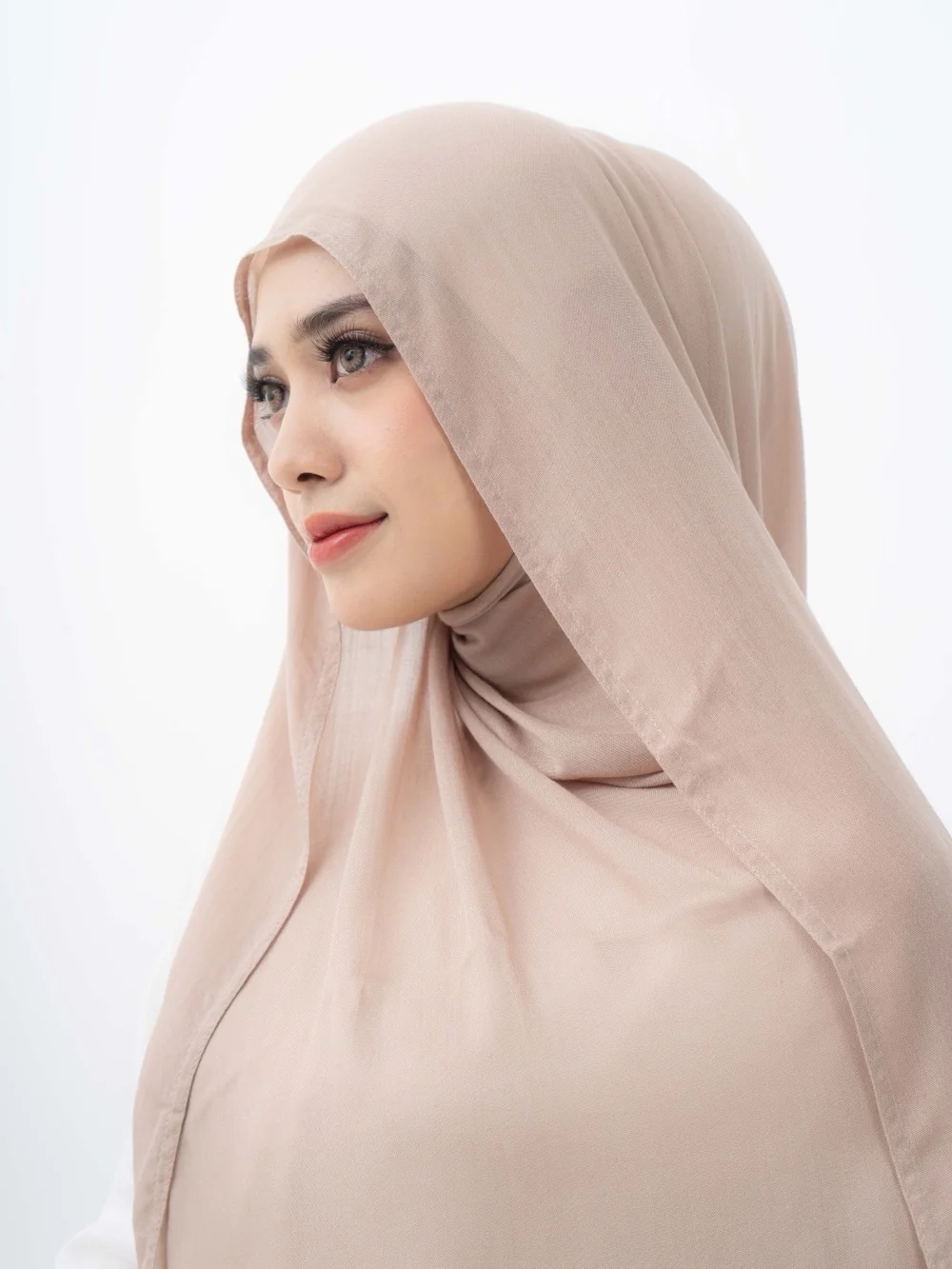
Younger Indonesian buyers have moved away from prints. Plain hijabs, no print, no applied accessories, no busy edge detail.
Do not misread that as buying cheap. It is the opposite. When the style is plain, only one thing is left to judge: the fabric. That is where the Indonesian market plays.
A fabric that is not widely available is what makes a piece feel exclusive. Buyers who know the category can tell the difference in how a fabric falls, how the surface reads, and how it behaves after half a day of wear. The brands that win here are usually not the ones with the busiest design — they are the ones whose material is hardest to copy.
That is also why we built our own fabric supplier network back in 2023. For a market like this one, fabric is not an input. Fabric is the product.
Malaysia: traditional and timeless, with the detail left in
Malaysia runs in a different direction. What holds there tends to be traditional and timeless rather than tied to a three-month trend cycle.
Trims and detail are welcome, even expected. A lace edge, embroidery, or visible finishing detail is part of what the product is worth — not a distraction from it.
The part we find most useful commercially: the age range sits much closer together. In Indonesia, a 20-year-old buyer and a 45-year-old buyer often want visibly different things. In Malaysia they frequently wear the same styles. For a brand, that means a good style can have a far longer selling life — and you are not forced to turn over collections as quickly.
Why this matters before you order
If you are a Malaysian brand taking an Indonesian catalogue as-is, the risk is obvious: you are importing the taste of the market next door to buyers who are looking for something else. Run it the other way and Indonesian brands entering Malaysia are often surprised that their domestic bestseller reads as too plain there.
The good news is that this is not a production problem. It is an information problem — and that information is cheap to buy.
How to settle it: sample, don’t argue
We never advise a client to decide their market’s taste in a discussion. There are too many variables, and you know your buyers better than we do.
The process is simple:
- Pick a few styles from our catalogue, or send your own reference — photos, a physical sample, or a tech pack.
- Tell us the adjustments you want: length, shape, fabric type, edge detail.
- We make the sample. Commitment fee Rp 300,000, credited in full to your first PO.
- We ship it — roughly 7 days in transit to Malaysia or Singapore.
- You hold the actual piece, show it to your buyers, and then decide.
If the sample misses, you are out a few hundred thousand rupiah and a couple of weeks — not a shipment of stock that will not move.
Once a sample is approved, custom production runs about 6 weeks. Our MOQ stays 2 kodi (40 pcs) per colour per style for ready stock and private label, the same for domestic and overseas orders. There is no separate export minimum.
What does not change across markets
One thing we keep identical regardless of destination: goods leave the factory ready to sell. QC done, packed individually under your brand. No repacking at your end — whether your end is Bandung, Kuala Lumpur, or Singapore.
If you are weighing which market to work, or want to know which catalogue styles fit your buyers best, get in touch and tell us the market. Shipping and export terms are on the export markets page, and pricing, MOQ and payment stages are on how to order.