 WhatsApp
We rarely talk about clients’ business. But there are two stories we keep coming back to, because they explain — better than any slogan — why an established brand eventually changes manufacturers. Names, products, and numbers are masked; protecting client confidentiality isn’t a formality to us, and one of the stories below is precisely about that.
The First Story: When Differentiation Quietly Disappeared
There was a brand that had worked with one manufacturer for quite a while. On paper, the relationship was clean — there was an agreement that a certain product and pattern wouldn’t be sold to anyone but them. And technically, that agreement was honored.
The trouble came from the gap that wasn’t written down. The manufacturer made something similar — slightly different — and sold it to another brand that happened to be their competitor. At first nothing felt wrong. The product was a touch different, no clause was broken. Everything looked fine.
But time passed. With each new product, the gap narrowed. Slowly the brand realized there was almost nothing left that set them apart from their competitor. What they had built as a signature could now be found elsewhere, priced side by side. They began to feel left behind — as if their manufacturer was leaning toward the other side, and they were no longer the priority.
That’s when they came to us.
For us, this story touches the most basic part of how we work. We respect the spirit of an agreement, not just the letter of its clauses. The custom work you develop with us won’t be turned into a near-copy for another brand — not because a clause forbids it, but because that’s how it should be. We’d rather have a long-term partner than a quick win. We’ve been in this trade for 20+ years, and we intend to stay a long time — and that kind of reputation isn’t built by selling out your own clients.
In fact, it’s experiences like this one that make us offer the opposite. For clients with enough volume, we can lock a fabric exclusively, straight from the mill — or, on a smaller scale, lock a specific color for one brand only. The differentiation that slowly drained away from the brand in this story is exactly what we work to protect for our own clients.
The Second Story: Growth They Couldn’t Keep Up With
The second brand arrived with a very different problem — and a far more common one.
They started small. A few hundred, then a few thousand pcs a month, with one manufacturer that was enough at first. While the scale stayed small, everything ran fine. Then their brand grew — and it grew fast. Demand climbed, and kept climbing.
This is where the old factory began to crack. They couldn’t hold the standard and hit deadlines at the same time. Production became the bottleneck exactly when the momentum was best: the demand was there, but the goods never quite arrived in full, and because everything was rushed, QC slipped too. The most painful part — the brand name they’d worked so hard to build started taking the hit.
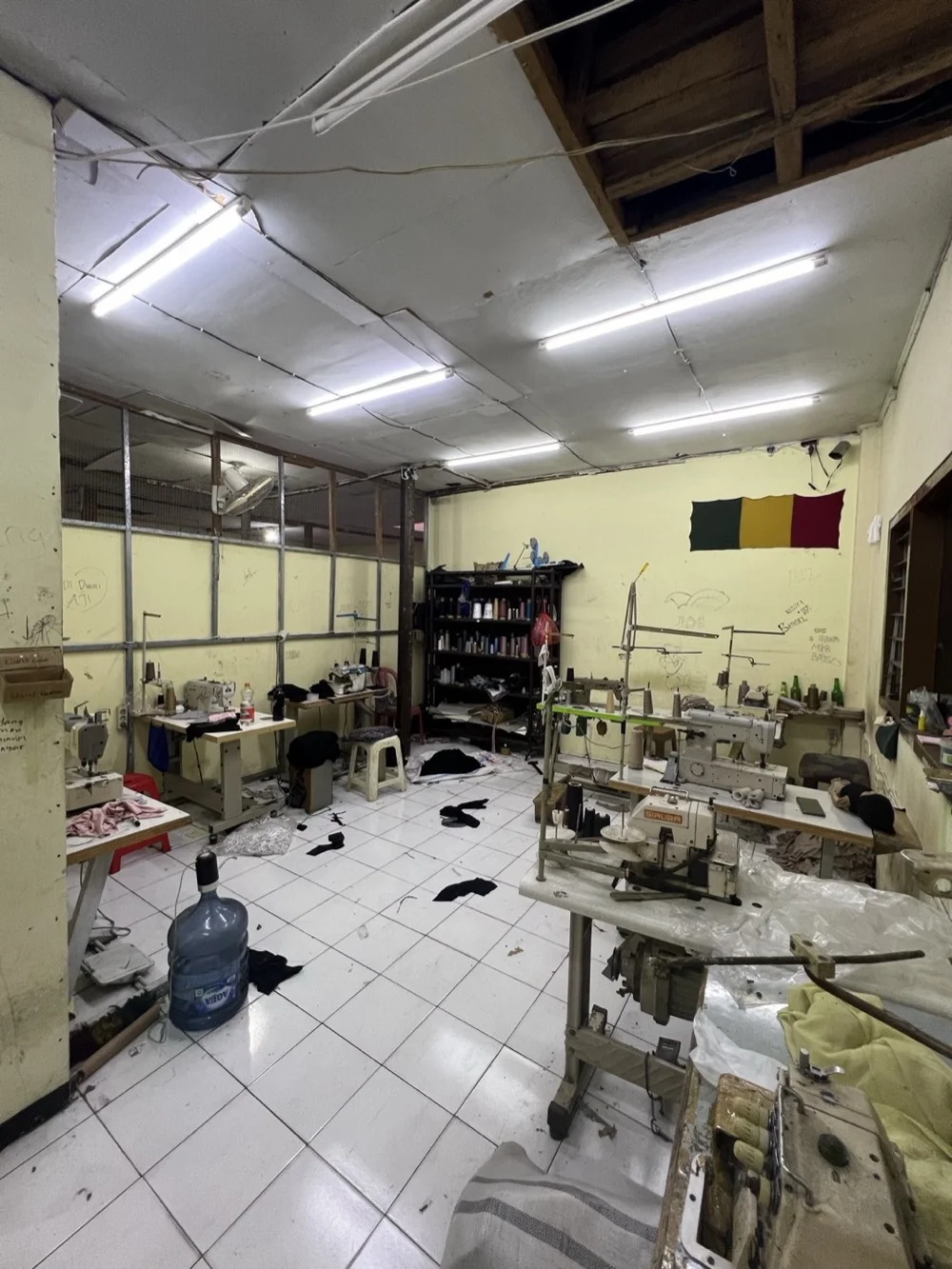
We could help because our capacity genuinely is large — 200,000+ pcs/month. But what we want to stress is the opposite of “we can make a lot.” We never pretend to be limitless. If a line is full, we say so plainly: “we’re at our ceiling, we’ll maximize what we have.” To us, it’s better to be honest about limits than to force a number and let quality fall.
We could simply add tailors and machines to chase volume. But untested hands and unsettled machines risk dragging quality down — and quality is the one thing we don’t compromise. So our team grows, but never in a rush. We select tailors carefully, and their work is checked and refined continually, rather than hired fast just to hit a short-term target.
What Both Stories Have in Common
Two brands, two reasons that look different — one about ethics, one about capacity. But both are really about the same thing: trust, and what happens when that trust starts to crack on the factory’s side.
A manufacturer isn’t just a place that sews. For a brand that’s already running, it’s part of your own reputation. That’s why we choose to play the long game — keeping secrets, being honest about limits, and refusing to chase numbers at the cost of quality.
If One of These Stories Feels Familiar
You don’t have to wait until things get worse. Start small: send one sample of your product, and see the result for yourself. Almost all our clients start with no great hesitation at all — precisely because we serve a sample and a small order first. They begin with a small quantity, judge the performance themselves, then move up to larger, more regular volume. There’s no leap of faith you have to take up front. If you’re weighing a move, read how to switch manufacturers without losing quality; if you want to secure capacity, read the second-source playbook. And if you’re still deciding whether it’s time, 7 signs your manufacturer is unreliable may help.
Tiga Raga Konveksi — 20+ years in Muslim apparel, 200,000+ pcs/month capacity, having supplied 100+ brands across Indonesia and Malaysia. Start the conversation over WhatsApp from the contact page, or first see how to order & pricing.